In the manufacturing world, understanding "what is the difference between casting and machining" is essential. Both processes are crucial in producing parts but differ significantly in methods and applications. Casting involves pouring liquid material into a mold, allowing it to solidify. This method is often used for intricate shapes and large productions. On the other hand, machining removes material from a solid block to create precise components.
Casting can reduce material waste and is typically cost-effective for large volumes. However, it may yield less precise dimensions compared to machining. Machining, while offering high precision, can be time-consuming and expensive for mass production. Understanding these differences can redefine your approach to manufacturing. Each process has its strengths and weaknesses, inviting further analysis. Exploring these contrasts can reveal insights that may benefit various industries. In the end, knowing when to use which method is key to optimizing production efficiency.
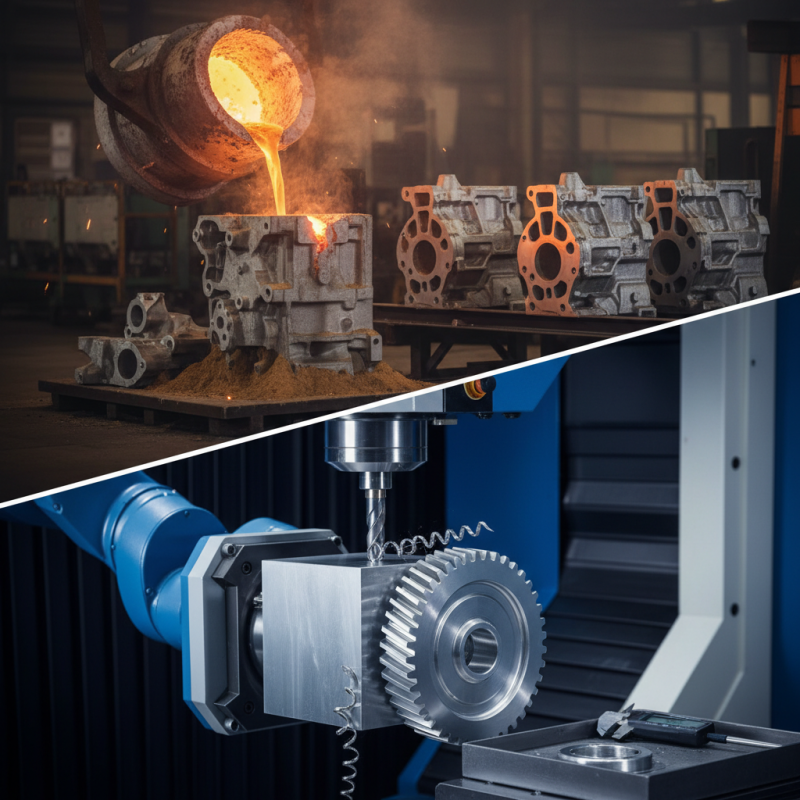
Casting and machining are two fundamental manufacturing processes. Each method has unique characteristics and applications that serve different industry needs. Casting involves pouring molten metal into molds to create desired shapes. This process can produce complex geometries efficiently. According to a report by MarketsandMarkets, the global casting market was valued at approximately $146 billion in 2022 and is expected to grow significantly over the coming years.
Machining, on the other hand, involves removing material from a solid block to achieve precise dimensions. Common machining techniques include milling, turning, and drilling. A study by Research and Markets indicated that the global machining market is projected to reach over $250 billion by 2025. This indicates a growing preference for precision-engineered parts in various sectors like aerospace and automotive.
Both casting and machining have inherent limitations. For instance, casting defects like porosity or shrinkage can affect the structural integrity of the final product. Machining can lead to material wastage and increased production costs. As companies strive for efficiency, the choice between these methods often depends on design requirements and cost considerations. Understanding these processes' strengths and weaknesses is critical for engineers and manufacturers alike.
: Casting involves pouring molten metal into molds, while machining removes material from solid blocks.
Casting is useful for creating complex geometries, serving various industries, especially in large-scale production.
Machining provides precise dimensions, which is critical for industries requiring high accuracy, like aerospace and automotive.
Casting can lead to defects such as porosity or shrinkage, affecting the final product's strength.
Machining can result in material wastage of up to 50%, depending on the design and process used.
Evaluate the shape, complexity, and precision requirements of your design. Each method has its pros and cons.
Yes, periodic design tweaks can enhance material usage, particularly when using machining processes.
Not necessarily. While casting generally has less waste, specific designs may make machining more efficient for precise requirements.
Cost considerations and design requirements are key factors in deciding which process to use.
Yes, reducing waste is crucial for minimizing environmental impact, making process choice an important consideration.
The article "Top 10 Differences Between Casting and Machining Explained" provides a comprehensive overview of two essential manufacturing processes: casting and machining. It begins by detailing the fundamental techniques involved in each process, highlighting how casting involves pouring molten materials into molds, while machining consists of removing material from a solid block. A key focus is on the material utilization and waste comparison, demonstrating that casting typically results in less waste but may involve more initial raw material.
Furthermore, the article examines the cost implications associated with casting versus machining, revealing that casting can be more cost-effective for large productions, while machining may be preferred for precision parts. It also addresses the various applications and industry preferences, illustrating how the choice between these methods often hinges on specific project requirements. Ultimately, readers gain insights into what is the difference between casting and machining, equipping them with the knowledge to choose the most suitable manufacturing process for their needs.

 ElvisCast Precision